

A CS2 knife trade-up swaps five Covert (red) skins for one knife or pair of gloves. Five StatTrak Covert items return a StatTrak knife, and five regular Covert items return a regular knife or gloves. Valve added this on October 22, 2025. An upgrader is a different tool: a site-run roll with a fixed win chance at a skin you pick. A trade-up has no site margin but carries market risk, while an upgrader is a game with a house edge.
How does a CS2 knife trade-up work?
You put five Covert skins into the Trade Up Contract in your inventory, and the game gives you one knife or pair of gloves from the collection of one of your inputs. HLTV's report on the update described it as handing over five Covert items in exchange for a knife or gloves. Older contracts still work as before: the classic version takes ten skins of the same rarity and returns one skin of the next rarity up.
What you can and can't control
- Input count: five Covert skins, not ten.
- StatTrak: You can't mix StatTrak and regular skins in one contract, and because gloves don't exist in StatTrak, an all-StatTrak contract can only return a StatTrak knife.
- Model: You cannot select an exact model or finish, but you can target a specific group by choosing your input skins.
- Mixing cases: Three skins from Case A and two from Case B means a 60% chance of drawing from Case A's pool and 40% from Case B's.
- Wear: Output wear is derived from the average of your input floats, mapped onto the output's float range. Lower input floats generally mean a lower-wear result.
Which pools are narrow?
Some cases hold a single knife model, which makes the outcome much easier to price. Check the case contents before you buy inputs, because some pools include gloves as well as knives.
| Inputs from | Possible result | Why it matters |
|---|---|---|
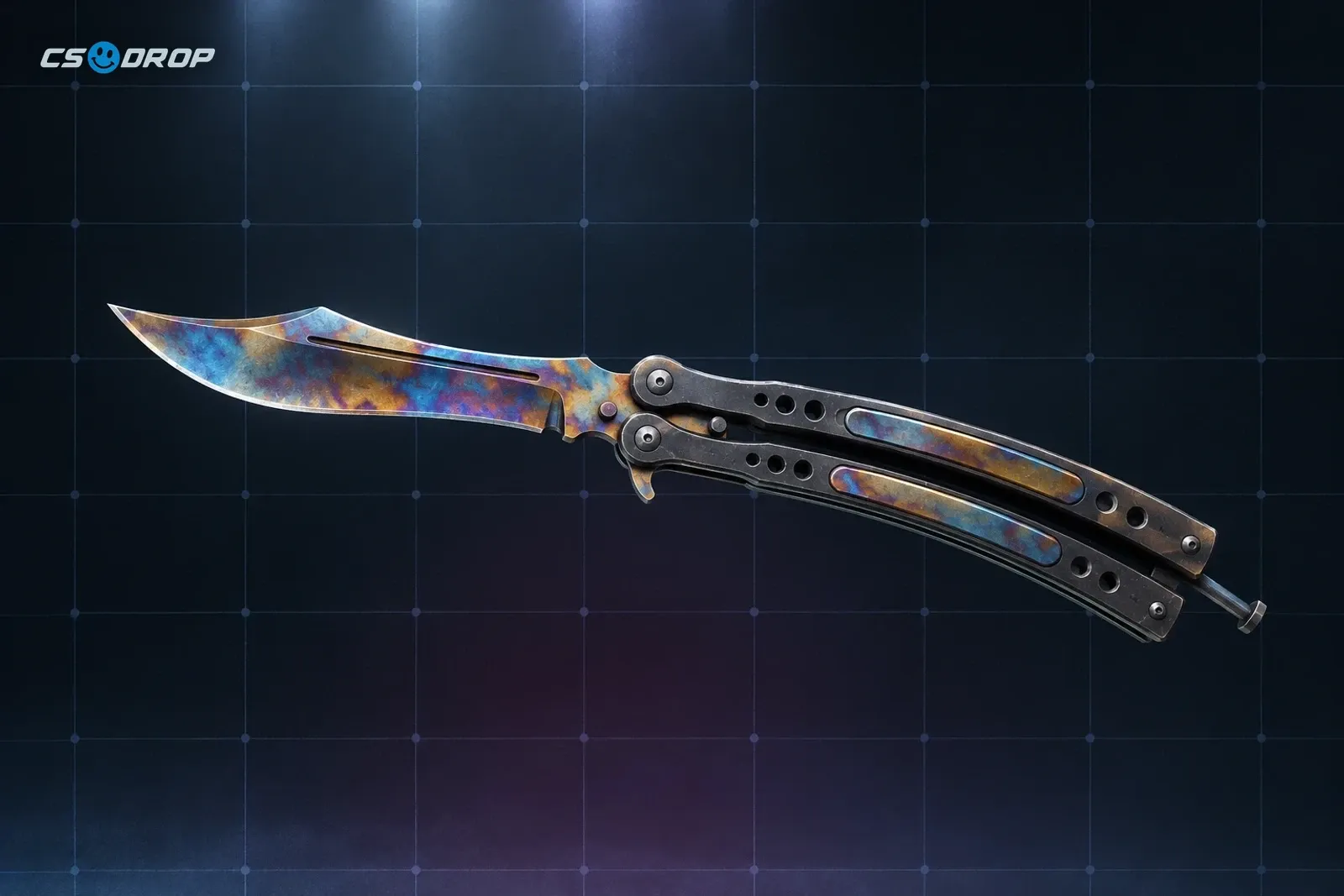
| Operation Breakout Weapon Case only | Butterfly Knife only | The only case that contains only Butterfly Knife skins; inputs are M4A1-S | Cyrex and P90 | Asiimov |
| CS20 Case only | Classic Knife only | FAMAS | Commemoration and AWP | Wildfire are the inputs |
| Kilowatt Case only | Kukri Knife only | Kukri appears in two cases, Kilowatt and Gallery |
| Dead Hand collection | Gloves only | A gloves-only pool, so regular inputs only |
| Three skins from one case, two from another | 60% / 40% between the two pools | You also roll for which pool you land in |
The finish is still random inside the pool. Aiming at a Karambit | Doppler through Chroma inputs can just as easily return a Gut Knife | Urban Masked. Butterfly Knives also exist in five cases, so only Breakout guarantees the model.
Do knife trade-ups still pay off after the price shift?
Not reliably. The update turned eligible Covert skins into raw material and pushed knife prices down. Inven Global reports that many knives and gloves fell by roughly 20 to 50 percent, while some items briefly lost 70 percent or more. Its example is MP9 | Starlight Protector, which climbed from around $3 to $65 because players chased Butterfly Knife outputs.
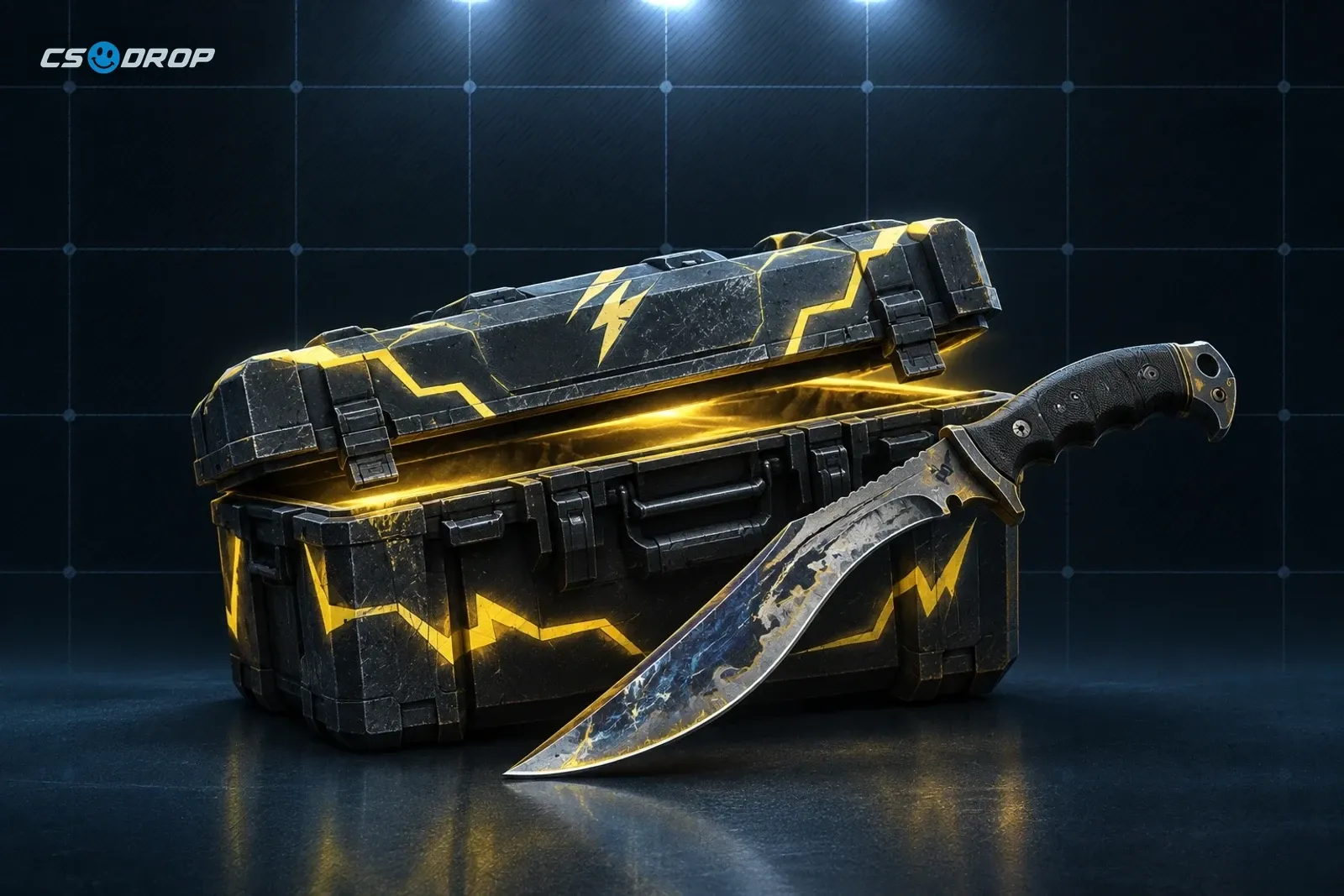
Recipes from calculator sites are snapshots, because input and output prices keep moving. Even in a one-model pool like Kilowatt's, the outcome spread is wide: the Kukri Knife | Fade sits far above budget camo finishes such as Safari Mesh. To judge a contract, work through four things:
- Expected value: multiply each outcome's price by its probability, add them up, then subtract what the five inputs cost. Each case's chance is its share of your inputs.
- Float: wear drives knife prices, so input floats can change the value of the result.
- Timing: the gap between buying inputs and selling the output can turn a positive recipe negative.
- Fees: selling on the Steam Community Market or a third-party marketplace costs you a cut.
Key takeaway: A trade-up has no site margin, but "no house edge" does not mean "positive expected value". Price every outcome against your input cost before you commit, and expect the numbers to move.
How does an upgrader work, and what does a win chance mean?
An upgrader is a probability trade run by a site, not by Valve. You stake value, pick a target skin and a roll decides whether you win it. Higher-value targets mean lower win chances. You choose the exact target, and the price of that precision is a fixed chance with a margin built in.
CSDROP has an upgrader. Check the page for what you can stake, which targets are available and what chance it shows before you confirm. We don't quote a margin here, because it isn't something to guess at.
Worked example: a 30% chance at a $100 skin
Say you stake $30 at a 30% chance for a $100 target. That is a fair ratio of $30 to $100. Here is the chance of at least one win if you repeat the same roll:
| Attempts | Chance of at least one win | Total staked |
|---|---|---|
| 1 | 30% | $30 |
| 2 | 51% | $60 |
| 3 | about 66% | $90 |
| 5 | about 83% | $150 |
| 10 | about 97% | $300 |
The formula is 1 − 0.7ⁿ. Three things follow:
- It isn't a guarantee. There is still about a 17% chance of five straight misses.
- Rolls are independent. After four losses the next roll is still 30%. It is never "due".
- More attempts means more spent. Ten attempts costs $300 to chase a $100 skin.
Now suppose a site trims the real chance from 30% to 28.5%. That figure is hypothetical, not CSDROP's. The expected return would drop to $28.50 per $30 staked, about 95 cents on the dollar, and over many rolls you lose that gap on average. Chasing a bigger multiplier doesn't remove a margin. It mostly makes results swingier.
Trade-up vs upgrader: which risk do you want?
They do different jobs. A trade-up always returns a knife or gloves, and the risk is that it's worth less than your inputs. A typical upgrader roll is all-or-nothing on a target you chose.
| Factor | Knife trade-up (Valve) | Upgrader (site) |
|---|---|---|
| What you put in | Five Covert skins, all regular or all StatTrak | Value you stake; check the page for what's accepted |
| Target control | Model narrowed by collections, finish random | You pick the exact skin |
| Result | Always a knife or gloves | The target skin or a miss |
| Odds | Set by the pool and your input mix | A fixed chance per roll |
| Who takes a cut | No site, but you pay market prices and selling fees | The site, through the margin in the chance |
| Skill involved | Market knowledge, float and pool maths | None, it is pure chance |
Neither is a reliable way to make money, and no calculator changes that.
When is it smarter to buy the knife?
If you only want to own a knife, buying directly often beats rolling for one. Inven Global notes that the cost of five eligible reds became the main price floor for craftable knives. In its 2026 report, basic finishes such as Safari Mesh and Boreal Forest fell from around $100 to $130 to roughly $40 to $65. Prices keep moving, so check current listings.
Buying makes sense when:
- You want a specific model and finish and don't want to leave it to chance.
- Five suitable reds cost about as much as the knife itself.
- You can't afford to lose the stake.
On CSDROP, the marketplace lets you buy CS2 skins with your balance and withdraw them to Steam. Steam trade holds can delay skin withdrawals, and KYC may be requested before some withdrawals. Paying for certainty usually costs a bit more on average than paying for a shot at something better.
Does provably fair change the odds?
No. Provably fair shows that a result wasn't altered after you committed. On CSDROP, case openings and games use HMAC-SHA256 from a server seed shown hashed before play, your client seed and a nonce, and you can verify results from the game history. Read the provably fair policy for how it works.
A fair 30% roll still loses 70% of the time. CSDROP is 18+ (or the age of majority in your country if higher). Only use money you can afford to lose, set a budget and a time limit before you start, and never chase losses.
FAQ
Can I choose which knife I get from a CS2 trade-up?
No. You can narrow the model by choosing inputs from a single case, such as Operation Breakout for Butterfly Knives, but the finish and wear are random. Mixing cases splits the pool in proportion to how many inputs come from each.
How many skins do I need for a knife trade-up?
Five Covert (red) skins. Use all regular skins for a regular knife or gloves, or all StatTrak skins for a StatTrak knife. You can't mix the two, and StatTrak contracts can't return gloves.
Are knife trade-ups profitable in 2026?
Not reliably. Profit depends on input prices, the outcome pool, float and selling fees, and prices move fast. Work out expected value from current prices before committing, and treat any calculator result as a snapshot, not a promise.
What does a 30% upgrade chance mean?
Each roll wins 30% of the time, regardless of earlier rolls. Over many attempts you'd expect about three wins in ten before any site margin, and losing streaks are common. Repeating the roll raises your chance of at least one win, but it also raises what you spend.
Is an upgrader better than a trade-up?
Neither is better; they carry different risks. A trade-up gives you a knife or gloves from a pool with no site margin but with market risk. An upgrader lets you aim at one exact skin, with a fixed chance and a built-in house edge.
Does provably fair mean I'm more likely to win?
No. It lets you verify that a result was generated from seeds fixed before play, so it wasn't changed afterwards. The odds and the house edge stay the same, which is why a fair roll can still lose.


