

If you want one specific skin, buying it is almost always cheaper than opening cases. A knife or gloves drops from Valve's in-game cases about 0.26% of the time, roughly 1 in 385. SteamAnalyst's per-case estimates, checked in October 2026, put the average return on popular cases between 17% and 72% below what you spend. Opening is paid entertainment with a negative expected result. It is not a way to aim at an item.
What does it cost to buy a skin?
Buying costs the listed price plus whatever your payment route adds. On the Steam Community Market the fees are already built into that price. Every sale carries a 5% Steam fee (minimum $0.01) and a 10% game fee for CS2. So for a seller to receive $10.00, the buyer pays $11.50.
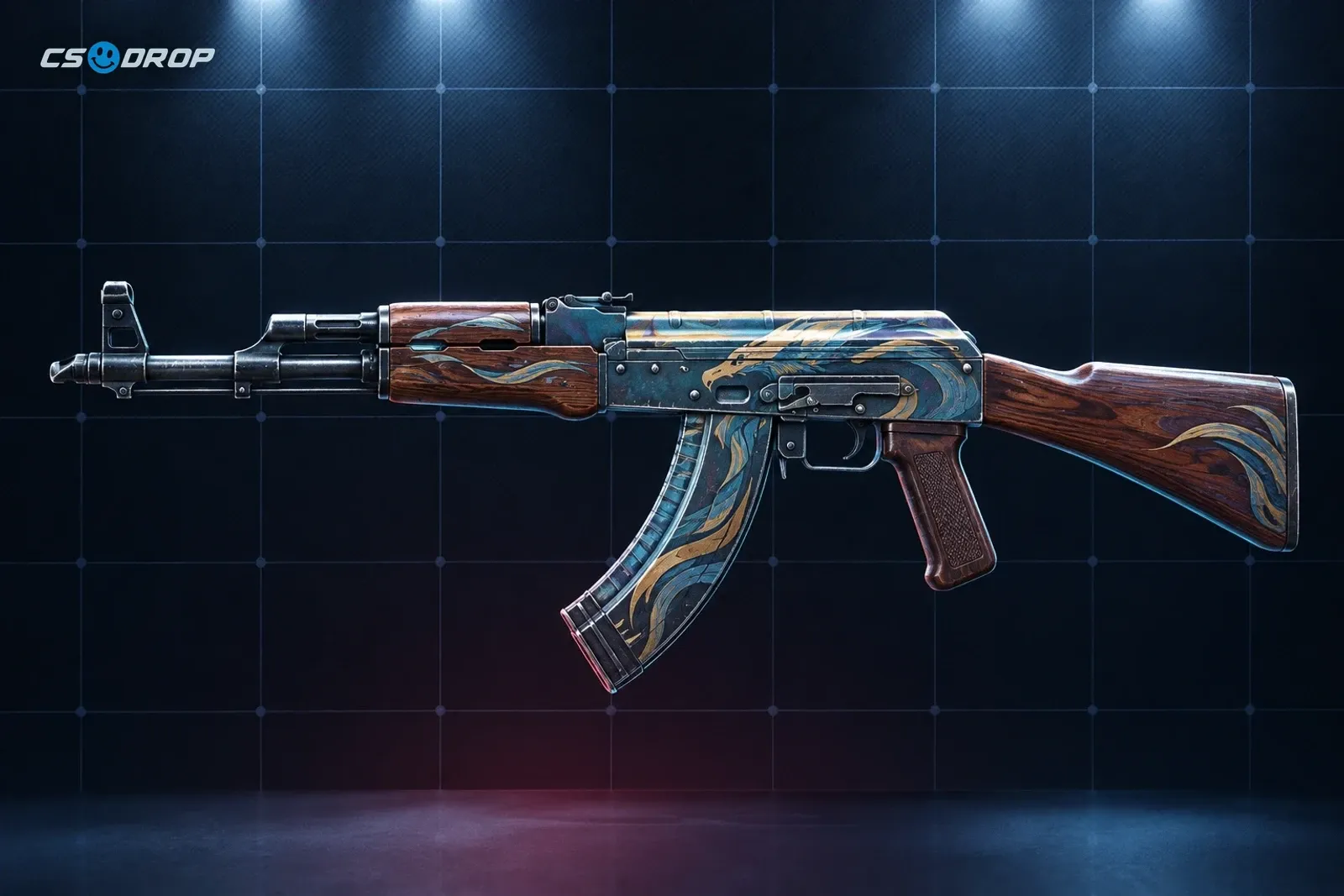
Those fees are why prices differ by platform. SteamAnalyst says third-party markets such as Skinport, CSFloat and BUFF163 often list 10–30% below the Steam Market. Steam is the simplest option but usually not the cheapest. Steam money also stays on Steam: Market proceeds can only be spent on Steam and can't be withdrawn.
How do float and pattern change the price?
The skin name and wear tier don't tell you the whole price. A 0.0699 float is Factory New and a 0.0701 float is Minimal Wear, though nobody could tell them apart in-game. Markets price the label first and the number second. If you want the full picture of exteriors and caps, the wiki explains how CS2 float values work.
- Tier edges: the boundaries at 0.07 and 0.15 are where prices jump most, so check the exact float.
- Low-float premiums: inside a tier, a 0.001 Factory New copy can trade well above a 0.06 one.
- Patterns and stickers: Doppler phases, rare seeds and sticker crafts add their own premium.
Pay these premiums because you like the skin, not as an investment. You can sell them back, but liquidity for rare copies is thin.
What does it cost to open cases, and what comes back?
Opening costs the case plus a key and, on average, returns less than you spend. A CS2 key costs $2.49 in the in-game store. A current-rotation case is often just cents on top.
Valve's published odds are the same for every in-game weapon case (the wiki lists them in more detail in its guide to CS2 case drop rates by rarity):
| Rarity | Chance per opening | About 1 in |
|---|---|---|
| Mil-Spec (blue) | 79.92% | 1.25 |
| Restricted (purple) | 15.98% | 6 |
| Classified (pink) | 3.20% | 31 |
| Covert (red) | 0.64% | 156 |
| Knife or gloves (gold) | 0.26% | 385 |
Valve has not changed this distribution, and it is identical across all weapon cases. Two details matter if you want one particular skin:
- The tier chance is split across the pool. In a case with two Covert skins, each has 0.32%. In the Kilowatt Case, any specific knife or glove has about 0.020%.
- There is no pity timer. Every opening has the same odds regardless of how many cases you've opened before.
How much do you lose on average?
SteamAnalyst models the expected return per opening from Valve's odds and live prices. Prices move daily, so treat this as a snapshot:
| Case | Cost to open (case + key) | Average return | Expected return |
|---|---|---|---|
| Kilowatt Case | $2.59 | $0.72 | -72.3% |
| Revolution Case | $2.66 | $0.84 | -68.4% |
| Recoil Case | $2.80 | $1.08 | -61.4% |
| Prisma 2 Case | $3.51 | $1.99 | -43.2% |
| Chroma 3 Case | $5.80 | $4.79 | -17.5% |
Source: SteamAnalyst per-case pages (Kilowatt, Revolution, Recoil, Prisma 2, Chroma 3). The cheap cases lose the largest share because the $2.49 key is almost the whole cost. Even the best row is negative. SteamAnalyst's own summary on these pages is that buying the skin you want outright beats opening for it. To run the same maths on any case yourself, follow this worked example of calculating a CS2 case's expected value.
CSDROP cases have their own item pools and drop rates, which may differ from Valve's in-game figures. Each case page shows its pool and rates before you open, so read that page instead of relying on a general number. You can browse CSDROP's 300+ cases without any key: cases open from your balance, and items you win are credited at market value. I won't quote a house edge for any case here, because it differs per case and changes.
Worked example: a $30 skin, bought vs opened vs upgraded
For a $30 skin, buying costs about $30 or less. Chasing it through cases costs several times more on average, and an upgrade is a single gamble. These numbers are a hypothetical, so swap in your own target.
Assumptions:
- The target is a Classified skin worth $30, in a case with three Classified skins.
- Each one gets about 3.20% ÷ 3 ≈ 1.07% per opening, or about 1 in 94.
- One opening costs about $2.60 (key plus a cheap case), like the Kilowatt row above.
- Wear, StatTrak and pattern are ignored, which flatters opening.
| Route | Cost | What you get | Certainty |
|---|---|---|---|
| Buy on Steam Market | $30 | The exact skin | Certain |
| Buy on a third-party market | About $21–27, plus that site's own fees | The exact skin | Certain, if the listing is legitimate |
| Open cases until it drops | About 94 openings ≈ $245 on average | The skin plus about 93 other drops | About 63% by opening 94 |
| Upgrade a $10 item toward it | $10 stake | The skin or nothing | Roughly 1 in 3 before any site edge |
The third-party range applies the 10–30% spread above to $30. It is not a quote, so check live prices.
The opening row needs care. Across 94 openings you get back part of your $245, in skins you didn't choose. If the case loses 60–70% like the cheap cases above, your expected net cost is roughly $145–$170. That is not a $245 loss, but it is far more than $30. The odds also leave room for bad luck: reaching 90% takes about 215 openings, which is roughly $560 at the same cost per opening.
If you resell later, Steam's fees take a bite on either route. A seller keeps about 87% of the price buyers see.
Where does the upgrader fit?
An upgrader trades a sure item for a chance at a pricier one, and a failed attempt costs you the stake. CSDROP's upgrader is one place to do this. Check the details on the page before you confirm.
An upgrade can beat opening dozens of cases when you already hold a skin you don't want. It doesn't beat buying. A $10 stake toward a $30 skin is roughly one chance in three before any site edge. Repeated upgrades toward the same skin cost about $30 on average plus the edge, and a bad run costs more.
Can I try case opening for free?
Yes. New CSDROP accounts get free cases with no deposit needed, though you may first have to verify your email or link Discord or Steam. There is also a 7-day challenge. Daily free cases reset every 24 hours and unlock by level, with deposit and wager conditions. The CSDROP free case page shows what your account can claim today.
Free cases let you see how rarely the good drops appear without paying. They don't change the odds on paid openings.
When is buying simply the better choice?
Buying is better whenever you care more about the item than the reveal. Most arguments on this topic come from mixing the two goals, so pick yours first.
- You want one specific skin, wear or pattern. Buy it. A case can't be aimed.
- You care about float or pattern. Inspect the exact item before you pay.
- You have a firm budget. A listing is a fixed price. A case is a spread of outcomes with an average below what you spend.
- You want the skin in your Steam inventory. On CSDROP's marketplace you can buy skins with your balance and send them to Steam through SkinsBack. Steam trade holds can delay skin withdrawals, so don't count on a skin arriving in time for a specific match or event.
Opening is reasonable when you want the reveal, accept a negative expected result, and treat the amount as money you'd spend on a night out. For a broader look at the trade-off, see our post on buying skins vs opening cases.
Key takeaway: Buying costs about the listed price. Opening toward one target skin typically costs several times more, because most of the spend comes back as skins you didn't want.
How do I keep it responsible, and what does provably fair prove?
Treat case opening as paid entertainment, never as income. CSDROP is for adults only: 18+, or the age of majority in your country if higher. Set a fixed budget first, don't chase losses, and stop when it's gone.
Provably fair doesn't change the odds. On CSDROP, case openings and games use HMAC-SHA256 from a server seed (shown hashed before play), your client seed and a nonce, and you can verify results from the game history. For case battles, the client seed comes from a future EOS blockchain block ID. This shows a roll wasn't altered after the fact. It says nothing about whether the average result favours you. CSDROP is not affiliated with Valve or Steam.
Note: Nobody can promise a win from opening cases or upgrading. If it stops being fun, take a break, and use the live chat if you need support.
FAQ
Is it cheaper to buy a skin or open cases?
For a specific skin, buying is almost always cheaper. Cases return less than you spend on average, and your target is only one of many possible outcomes. Cases make sense for the experience, not for getting a particular item.
How many cases do I need to open to get a knife?
There is no fixed number. At 0.26% per case, you need about 267 cases for a 50% chance at a knife or gloves. After 385 cases there is still roughly a 36.7% chance of having had none. A dry run never makes the next case more likely to hit.
Are third-party markets cheaper than the Steam Market?
Often, yes. Steam's 15% total fee is built into its listings, and third-party sites charge sellers less, so the same skin is often listed 10–30% lower. You still need to count that site's deposit and withdrawal costs and check that the seller is legitimate.
Does float affect the price of a skin?
Yes, mostly at wear-tier edges and, inside a tier, at the lowest floats. Check the exact float before you buy. Two copies with the same name and wear label can sell for very different prices.
Can I try case opening without spending money?
Yes. New CSDROP accounts get free cases with no deposit needed, and the free case page shows what is available. A good free result tells you nothing about what paid openings will return.


